You Approve. Trustero AI Does the Work
See TPRM in Action
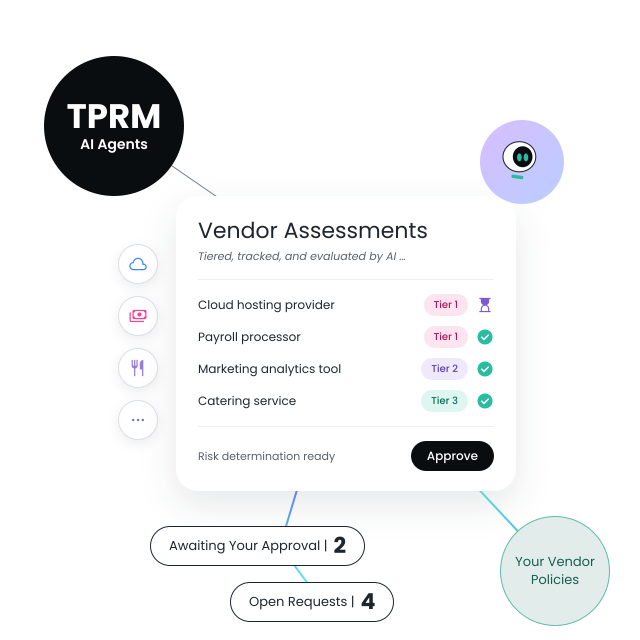
Watch a quick walkthrough to see how Trustero’s AI agents orchestrate the vendor assessment process to collect and review vendor attestation, flag gaps, and follow up with your third parties, so you can approve vendors faster without losing sight of risk.
Agentic Orchestration
Trustero tracks open requests, escalates what stalls, and starts the next step as soon as the last one closes.
Risk-Tiered Assessments
Set tier criteria once. Review depth scales with each vendor's risk.
AI First-Pass Evaluation
AI reviews attestations and questionnaire responses against your vendor policies and prepares a risk determination for your approval.
Less Follow-Up. Consistent Reviews. Clear Approvals.
When AI agents run the logistics and the first-pass analysis, your team's time goes to review and approval.
Stop Tracking Requests by Hand
The orchestrator watches for changes and kicks off the next internal step. When something outside Trustero is needed, like a trust portal attestation, a security rating, or a finance sign-off, it becomes a request with an owner and an escalation path. Once someone closes it, the next step runs automatically.
Scrutiny Matched to Risk
Your lowest-tier vendors may need little or no vetting. Your highest-tier vendors may need ISO 27001 attestations, proof of insurance, funding status, and cloud-specific answers. Define the criteria that place a vendor in a tier, and Trustero applies that tier's review automatically.
Your Team Approves. AI Takes the First Pass.
Trustero AI evaluates attestations, questionnaire responses, and vendor information against your vendor risk policies, then prepares a risk determination for your team to review and approve. Reviewers start from a completed first-pass analysis rather than a blank page.
Adopt at Your Own Pace
If your vendor risk process runs across four to seven tools today, you don't have to replace them all at once. Start with one piece, such as risk-tier evaluation for new vendors, and expand as it proves out. Over time, Trustero can become your central system of record for vendor risk.
How It Works
Define It. Assess It. Approve It.
Think of Trustero TPRM as a coordinator that already knows your vendor policies. Tasks inside Trustero run automatically. Tasks outside it, such as pulling an attestation from a vendor's trust portal or getting a legal sign-off, become requests assigned to an owner, and the process continues once they're closed.
Tier requirements can include
READ
How to Build an Evidence-First, Gap-Driven TPRM Workflow
Risk Tiers and Overrides
Set the Standard Once. Adjust When Needed.
Trustero applies your tier criteria to each vendor automatically, so reviews follow your policy consistently. When a vendor needs different handling, you can override the criteria for that vendor alone.
How GRC Teams Use Trustero TPRM
Scenario:
A GRC manager oversees assessments for hundreds of vendors and tracks open items in a spreadsheet that falls behind every week. With Trustero TPRM, each outstanding item is a request with an owner. Stalled requests escalate automatically, and closing one kicks off the next step in that vendor's assessment.
Scenario:
A risk manager's team applies the same heavy review to a catering vendor as to a cloud infrastructure provider. They define tier criteria once. Low-tier vendors now clear with minimal vetting, while top-tier vendors are asked for ISO 27001 attestations, proof of insurance, funding status, and details on how they operate within AWS.
Scenario:
A CISO wants stronger vendor risk coverage but can't justify replacing the tools the process runs on today. The team starts with risk-tier evaluation for new vendors only, keeps existing tools in place, and expands Trustero's role as results come in.
Scenario:
A privacy officer needs closer scrutiny for a new vendor that will process customer personal data. They apply stricter criteria to that vendor, including privacy questions and a legal sign-off. Trustero AI evaluates the vendor's responses against the privacy requirements in the vendor policy, and the legal review arrives as an owned request.
Scenario:
An internal auditor needs to confirm that vendor assessments followed policy. In Trustero, each vendor's record shows its tier, the requests opened and who closed them, and who approved the final risk determination.