
Compliance teams depend on evidence to determine whether controls are operating as expected. However, evidence does not become useful simply because a report has been downloaded, a screenshot has been captured, or a document has been placed in a repository. A reviewer also needs to understand where the evidence came from, which systems and populations it covers, what period it represents and what conclusion it is expected to support.
Without that context, the collection process may be automated while the review process remains largely manual. Someone still has to reconcile files, align dates, locate approvals, explain exceptions, and connect the material to the applicable control and test procedure. In many cases, finding the file is the easiest part of the process.
Evidence introduces a context problem
Let’s take a quarterly access review as an example. The identity platform contains a list of active users, the human resources system identifies current and terminated employees, and a ticketing system contains approvals, exceptions, and remediation activity. Each source may be accurate on its own, but none of them tells the entire story.
The reviewer still needs to determine whether the records cover the same population and period. They must also confirm that the appropriate approvals are present, understand whether exceptions were identified and determine whether those exceptions were resolved. Successfully downloading three files does not answer those questions. Someone must connect the information to the applicable control, apply the test procedure, and document why the combined evidence supports, or does not support, the conclusion.
A recent practitioner discussion described a related frustration: compliance proof is often distributed across disconnected systems, while teams still spend considerable time converting source data into documentation a reviewer can use. Although formatting contributes to the burden, the underlying problem is broader. Evidence collection breaks down when information becomes separated from the operating context that explains what it is supposed to prove.
A better process starts before the export
Before an organization automates evidence collection, it needs a current understanding of its operating environment. That includes knowing which systems and populations are in scope, where the source evidence resides, what point in time or period the evidence must cover, which control and test procedures will use it, and which approvals, exceptions, or follow-up actions need to accompany it.
This operating context sets the boundaries for the collection process. It helps determine not only what should be retrieved, but also where the evidence belongs, how it should be evaluated and what additional material may be required. Without that context, an automated process may retrieve the latest available report without recognizing that it covers the wrong quarter, excludes part of the intended population, or fails to include the approval record needed to complete the review.
When teams evaluate manual compliance evidence collection software, the central question should therefore extend beyond the number of available integrations. The more important question is whether the software can preserve the relationship between the source, the scope, the control, the test, and the review process. A connector can move a file. It does not automatically understand why the file matters.
Automating an unclear request may make a compliance workflow failure happen faster. It does not necessarily make the resulting evidence stronger.
AI can prepare the review
Specialized GRC agents can support the repeatable work involved in collecting and preparing evidence. They can help retrieve approved source material, organize information, compare records across systems, suggest relevant control mappings and identify missing or contradictory evidence. This can reduce manual work such as renaming files, reconciling formats, searching across repositories and recreating the same documentation process during each review cycle.
AI can also prepare a first-pass analysis so that a practitioner begins with an organized body of evidence and a defined set of questions rather than an unstructured folder. This is where automation can create meaningful value. It can reduce repetitive preparation and help the reviewer focus attention on incomplete information, unusual results and material exceptions.
Preparing the review, however, is not the same as making the decision. A qualified person still needs to determine whether the evidence covers the intended scope and period, whether the source is reliable, whether an exception changes the result and whether the evidence is sufficient to support the final conclusion.
A file can be authentic and still be incomplete. A proposed control mapping can appear reasonable and still require correction. A test can produce a clean result while overlooking a material exception. The reviewer must be able to see the basis for the result, challenge it and change it when necessary.
Traceability is the real outcome
The most useful evidence workflow preserves a visible path from the source and scope of the evidence to the relevant control, test, review and conclusion. That path allows another person to understand what was collected, how it was evaluated and why the resulting conclusion is defensible.
Traceability also improves future review cycles. When the relationship between the evidence and the decision is preserved, the team does not have to reconstruct the process from spreadsheets, email threads and previous requests each quarter. The evidence arrives with its purpose, review history and supporting context intact.
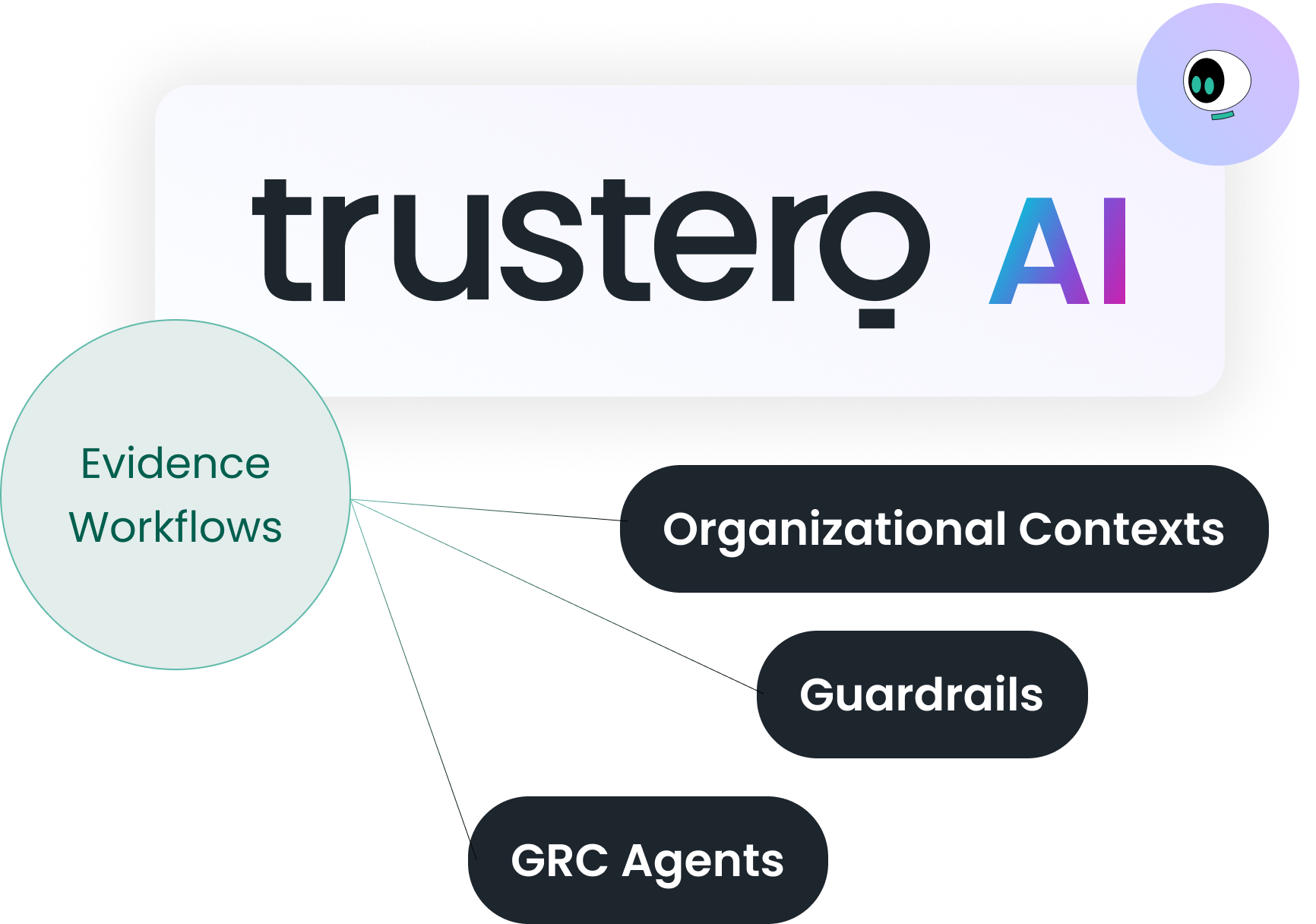
Trustero applies organizational context, guardrails and specialized GRC agents to defined evidence and control-assurance work. The objective is to reduce repetitive preparation, surface gaps earlier and give qualified reviewers a clearer basis for decisions that still require human judgment.
The goal is not to collect more files. It is to ensure that evidence arrives with enough context to be traced, tested, reviewed, and defended.